History of player pianos
The player piano (called a Pianola) was invented by Edwin Scott Votey in 1895. The invention revolutionized music in the home, allowing people to play songs without needing a skilled pianist. After the technology was patented in 1897, player pianos became very popular homes, and QRS produced over 11 million player piano rolls by 1926. When the stock market crashed in 1929, there was a sharp decline in player piano production. As decades went on, player pianos became more obsolete due to changes in music technology and a preference to have smaller, more portable music players like vinyl record players.
There are still plenty of player pianos today, but having a working antique player piano is pretty rare. Their complicated pneumatic tubes and intricate mechanisms are difficult to maintain, and paper piano rolls deteriorate over time. Many antique player pianos are over 100 years old, and their strings and pins are fragile and difficult to keep in tune.
Modern versions of player pianos are digital and no longer require paper rolls… or foot pedaling!

How player pianos work
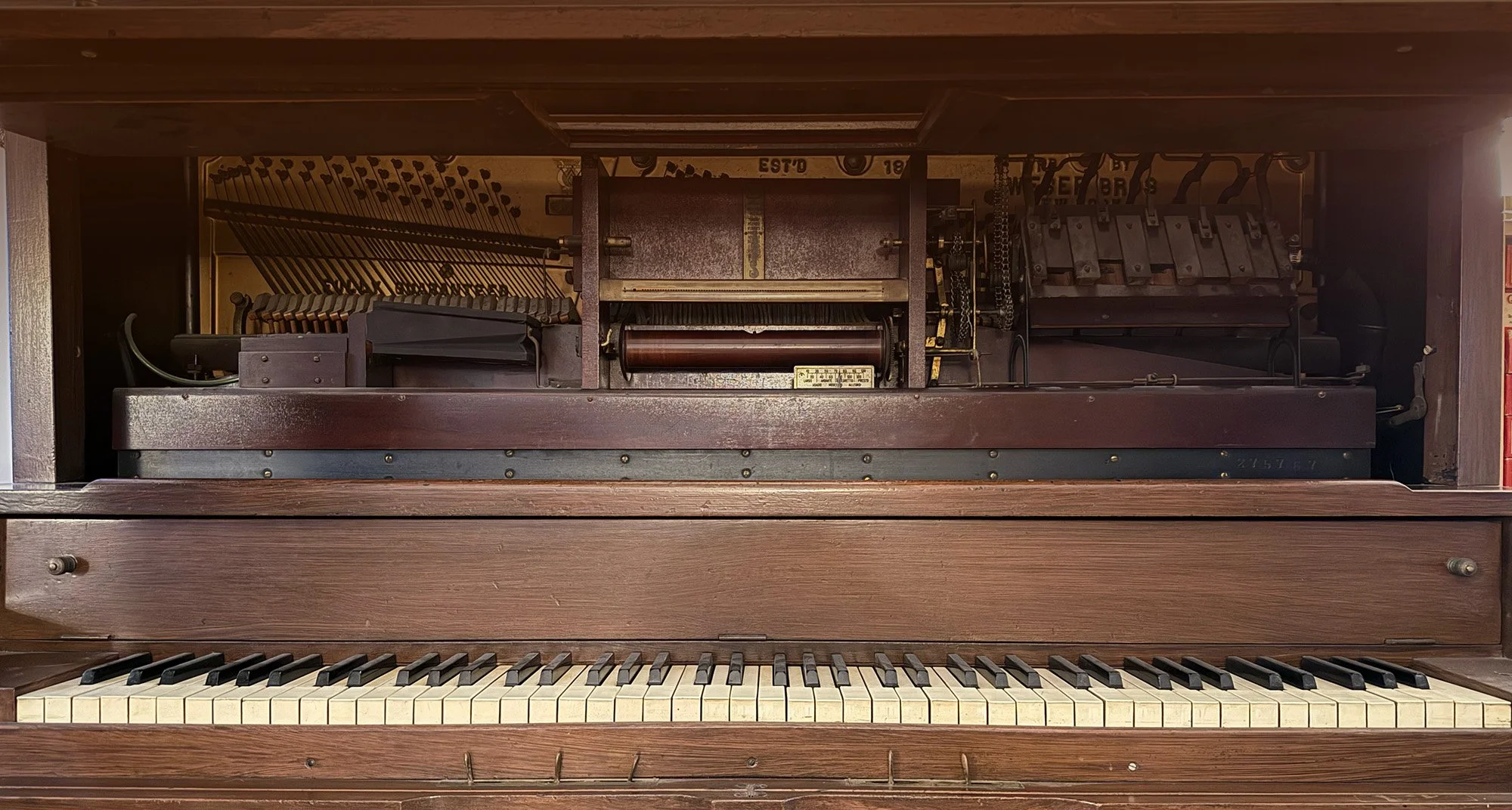
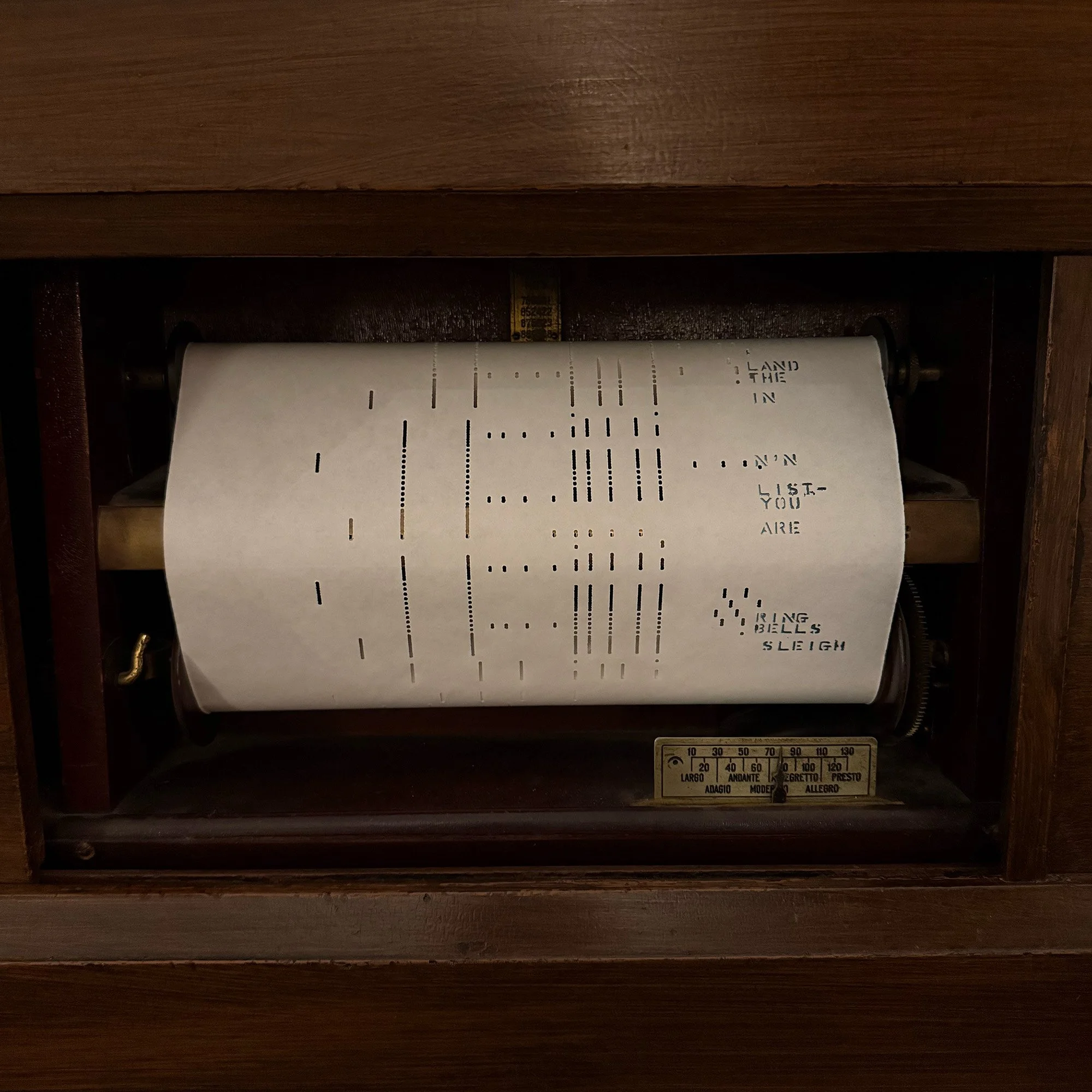
The piano is powered by foot pedals (it’s a serious workout!), which work to push air through a pneumatic system and advance a paper song roll. The song roll has perforation holes in it, and as you pump the pedals, the paper moves across a tracker bar with 88 little holes that correspond to the 88 keys on a piano. As air flows through the holes, piano keys are triggered to play. It’s sort of like a music box but larger and with more moving parts!
There are levers on the player piano to adjust the tempo and acoustics. When you finish playing a song, there’s a lever that can switch the directions of the roll to help you re-roll the song.
About our player piano
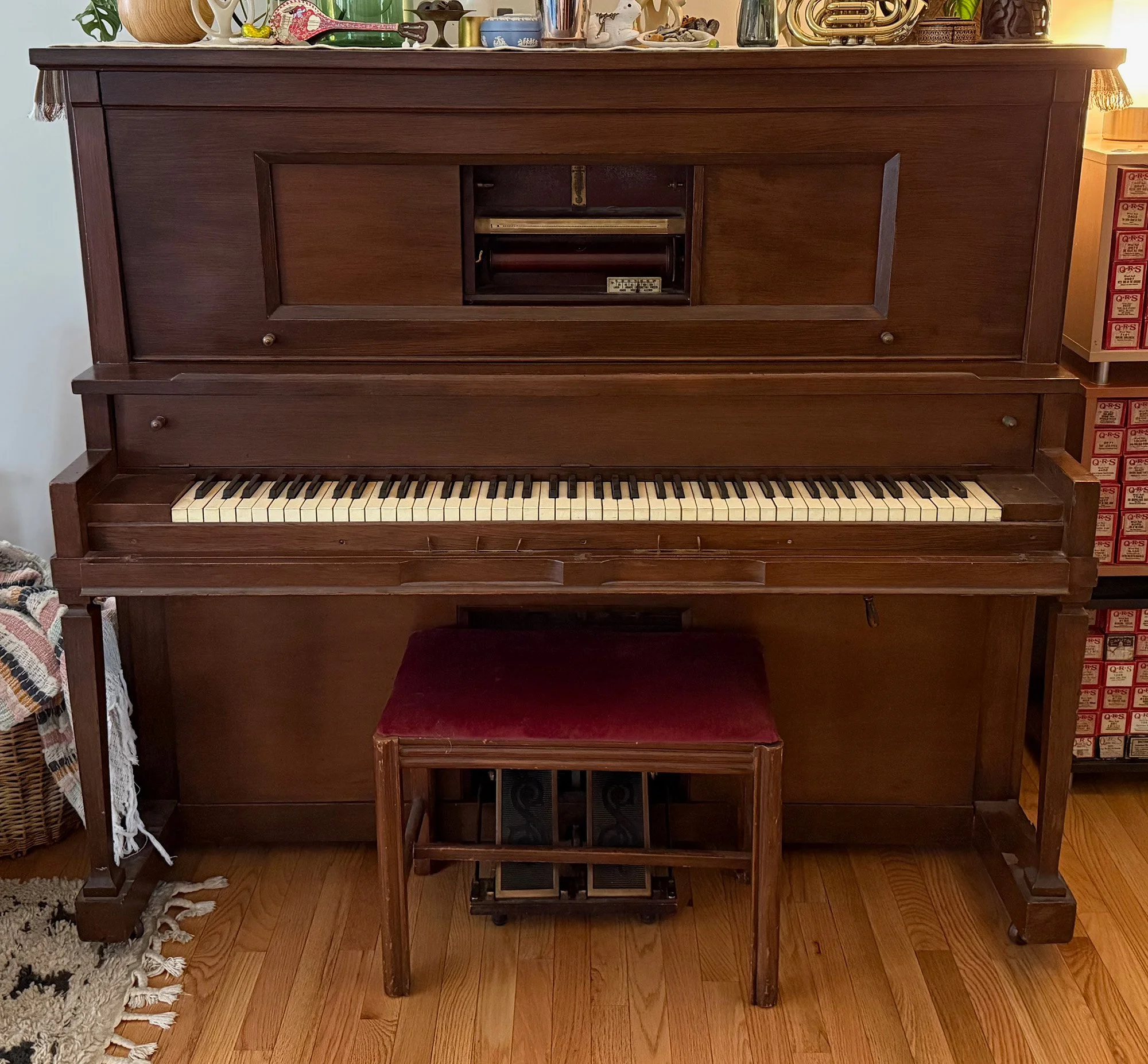
My grandpa received this player piano from a friend in the late 1960s (there’s some folklore that someone was playing the piano in the bed of a truck as they drove it to grandpa’s house, which tells you a bit about this cast of characters!) He spent a considerable amount of time refurbishing it using some books as resources.
Grandpa replaced all 88 striker bellows in the piano, one for each key. He also replaced some of the felt and some of the other pneumatic mechanisms. There’s definitely some duct tape in this piano, which the piano tuner found and decided to keep!
Once he finished refurbishing the player piano, grandpa ordered some song rolls out of a catalog so he could entertain the “Round Robin” club, a group of 6 or 7 local couples who took turns hosting dinner parties at their houses. They would gather around and sing merrily, the piano filling the house with music while the kids were supposed to be sleeping. He ordered a couple of the rolls (Peg of My Heart, I’m Forever Blowing Bubbles) specifically for the Round Robiners, and he also let the kids pick out songs from the catalog. Eventually, grandpa tired of having to pump the piano pedals and figured out a way to hook the piano up to a vacuum to automate the pumping! The vacuum was a bit loud for the dinner party, so he ran a tube through the wall down to the basement and would run up & down the stairs to turn it on & off.
After the success of the first player piano, grandpa started collecting other broken player pianos in need of fixing. He had the idea that he’d refurbish a piano for each of his 5 kids. Unfortunately, the first piano ended up being the only one he fixed entirely, and the other 5 remained in various states of repair. While he was collecting pianos (and piano parts), he also collected player piano rolls, and we found over 300 rolls stored in his house!
When it came time to sell grandma & grandpa’s house, we moved the piano out of the home for the first time in nearly 60 years (shout-out to A-Team Movers of Ithaca, NY because that was no small feat!) We now hope to keep the player piano legacy alive with our own merry singing and hope to share this special part of our family with all of you through our videos!